
KALPA - Original Rhythm Game
QueseraGamesMusic
4.2272.00 Reviews
- Version
- 3.2.39
- Installs
- 1.00M
- Age Rating
- Teen
Screenshots



Our Review of KALPA - Original Rhythm Game
 Analysis by Appyee
I came to this rhythm game expecting a quick way to tap along to music, but its appeal is broader: it asks you to listen closely, learn how notes move, and gradually build confidence. KALPA - Original Rhythm Game is a music game from QueseraGames, free to start, and aimed at players who enjoy turning a song into a small, focused challenge. My first advice is simple: begin on a difficulty that lets you follow the beat rather than chase a high score. The early satisfaction comes from finding the rhythm, not from playing perfectly.
What to expect when you start
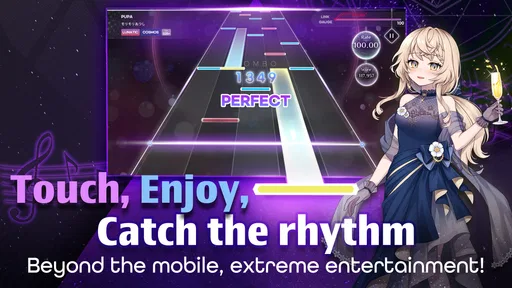
The first few minutes are best treated as a learning session. Notes arrive from above, and you respond with taps, holds, or slides as they reach their timing points. That sounds familiar if you have played other phone rhythm games, but the vertical layout means your eyes need to track both the note patterns and their approach. I found it easier to concentrate on a small area of the screen instead of trying to watch every visual effect at once.
The presentation is part of the attraction. The setting frames the music as a journey through a cosmic world, with bright, shifting imagery behind the playfield. That atmosphere can make a song feel more absorbing, though it may also compete for attention while you are still learning. If a busy background distracts you, focus on the note lanes and the sound; the visual spectacle is a bonus, not something you need to study to play well.
It is useful to know what kind of commitment you are choosing. This is designed for short, repeatable attempts, not for passive listening or a long narrative session. A song gives you a clear goal: keep time, finish the chart, then decide whether to try again. I like that format for a spare moment, but it is less suitable when I want music to play in the background while I do something else.
A calmer route through the first session
Before worrying about difficult charts, pick a song whose beat feels easy to hear. Let your first attempt be a test of the controls and timing rather than a verdict on your ability. When a run goes wrong, notice whether you missed a tap, released a hold early, or lost track of a quick sequence. Those errors feel similar at first, but identifying the kind of mistake gives you a practical next step.
A useful habit is to replay one section or song after a short pause instead of immediately switching between tracks. Repeating the same material gives your hands time to recognize its pattern, while a brief reset can stop frustration from turning into hurried taps. I also recommend starting a session when you can give the screen your attention; trying to play while walking, talking, or watching something else makes timing harder and is not a good use of the game’s strongest feature.
There is no need to treat a low score as a failure. In a rhythm game, a first clear can be meaningful even when the timing is uneven, because it shows that you can stay with the chart from beginning to end. Once that feels comfortable, you can raise the challenge. This gradual approach is especially reassuring for newcomers who assume that every music game expects fast reflexes from the opening song.
Music, art, and the game’s personality
The music is the main reason I would suggest giving it a chance. The selection brings together electronic sounds, piano-led passages, and more orchestral color, so the mood can shift from energetic to reflective. Rather than choosing only by apparent speed, listen for a pulse you can follow. A track that sounds exciting may still be a poor first practice choice if its rhythm is hard for you to pick out.
The illustrations and animated feel give the experience an identity beyond a bare row of notes. That makes a good impression when you want a music game with a distinct mood, but it is worth remembering that style and readability are separate things. During a demanding passage, I would prioritize clear timing and comfortable focus over taking in every background detail. Headphones can help you hear the beat more clearly in a noisy room, although the game remains a screen-led activity rather than a substitute for a music player.
How to tell whether it suits you
If you enjoy learning a pattern through repetition, the rising challenge can be satisfying. Getting through a section that initially seemed too quick is a small but tangible win, and chasing a cleaner run gives experienced rhythm-game players a reason to return. The game has a Teen content rating, so it is also sensible to consider that when choosing something to share with a younger player.
On the other hand, this is not my pick for someone who wants a completely relaxed, hands-off music experience. A demanding chart asks for attention, and the notes can become difficult to follow before your timing settles in. If you prefer a rhythm game built around a familiar licensed-song catalogue, or one whose main draw is social competition, compare those priorities before settling here. KALPA’s stronger pull is the blend of its own musical identity, vertical play, and a steadily learnable timing challenge.
As a first-time player, I would make the first session deliberately small: choose a comfortable track, complete it once, and then retry only if you can name what you want to improve. That keeps the game welcoming instead of turning it into a reflex test. If you find yourself enjoying the process of listening, correcting, and trying again, you have probably found the right reason to continue.
After that first clear, the next step is to make practice specific. If a run falls apart near the end, stay with the same song and watch for the point where your attention slips; changing tracks every time can hide the pattern you need to learn. If you are consistently early or late, slow your hands mentally by counting the pulse and waiting for the note to meet its target, rather than tapping as soon as you see it. This is a small adjustment, but it turns retries into deliberate practice instead of guesswork.
From a first clear to a useful routine
A realistic way to fit the game into an ordinary day is to play one song during a break, then stop while you still feel curious. That gives you a natural endpoint and makes it easier to return without feeling that you need to grind for a long session. On a commute, I would only play while seated and able to keep the phone steady; crowded movement and distractions make precise input less comfortable and can turn a pleasant challenge into an irritating one.
For a more focused session, choose one goal before you start: finish a chart, improve a particular passage, or simply become comfortable with a song’s rhythm. Avoid judging progress only by the final score. A cleaner opening or a hold that you now sustain correctly is useful evidence that your practice is working, even if another section still trips you up. This approach is particularly helpful for players who are new to rhythm games and might otherwise assume they have to master every note immediately.
When you want more variety, move to another track after you have learned what the first one is asking of you. Switching songs can refresh the mood, but it also means adapting to a new musical pattern. I treat variety as a reward after a focused attempt, not as a fix for every difficult passage. That balance keeps the soundtrack feeling fresh without losing the satisfaction of recognizing a chart you have already practiced.
Choosing between this and other music games
Compared with rhythm games that lean heavily on recognizable chart hits, this one makes more sense if you are open to discovering music through the game itself. Its mix of electronic, piano, and orchestral character gives the play sessions their own atmosphere. If you mainly want to tap along to songs you already know by heart, a game centered on familiar licensed tracks may be a better fit. If you want the music and visual world to feel like one package, KALPA is more compelling.
It also differs from music apps that are primarily for listening. Here, the soundtrack is something you interact with: attention, timing, and repetition are the point. That makes it more rewarding when you have a few minutes to focus, but less convenient when you simply want background music or a hands-free pastime. I would choose it over a passive playlist when I want a compact challenge, and choose the playlist when I need to keep my eyes and hands free.
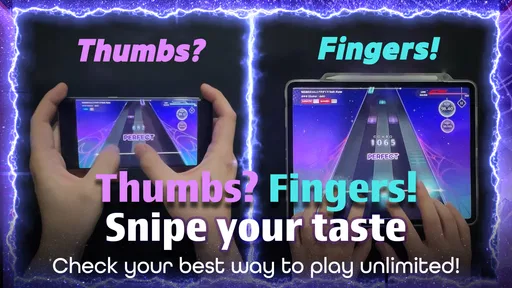
For newcomers, the vertical presentation is another consideration. It keeps play centered on a phone screen, which feels natural for a quick session, but it still requires steady attention and accurate touches. Players who prefer a larger display or a controller-based setup may be happier with a different rhythm-game format. The best choice depends less on which game is universally better and more on whether you want this specific combination of phone-focused play, original musical atmosphere, and repeatable skill practice.
Practical choices before you spend or settle in
The game is free to download, with in-app purchases ranging from $0.99 to $42.00 per item. I would first play enough to decide whether the music and timing style suit you, then consider optional spending only if you understand what you are choosing and genuinely want it. A purchase is not a shortcut to enjoying the core rhythm challenge; the most satisfying progress still comes from learning a song and improving your timing.
It has an average rating of 4.1 from around 10,000 ratings, with 271 written reviews, and has been installed over 500,000 times. Those figures suggest it has found an audience, but they cannot tell you whether its soundtrack matches your taste or whether its play style feels comfortable in your hands. The best test is still a patient first session: sample the feel of the notes, notice whether the music holds your attention, and decide from that experience.
The current version is 3.2.24, and the game requires Android 7.0 or later. It was released on January 31, 2021, and QueseraGames is the developer. Those details are useful when checking whether it will run on your device, but they do not change the basic recommendation: give yourself room to learn before deciding whether the challenge is for you.
Getting Into the Groove
So, what’s the scoop with KALPA? Well, the game kicks off by plunging you into a universe filled with stellar tunes and vibrant visuals. You play as KALPA, a stellar pianist in an astral world. Your mission? To restore starlight by playing music. Sounds cosmic, right?
The game is super intuitive. You’ve got your classic rhythm game setup where notes fall from the top of the screen, and you’ve got to tap, hold, or slide exactly on cue. The better your timing, the higher your score. But don’t let the simplicity fool you—this game gets challenging fast, and that’s part of the fun!
Tunes That Transport You
Let’s talk about the music, because honestly, that’s what we’re all here for. The soundtrack in KALPA is nothing short of epic. We’re talking a mix of electronic beats, piano melodies, and a touch of orchestral magic. Each track is beautifully crafted, and there’s something satisfying about nailing a particularly tricky section of a song.
What’s cool is the variety. Whether you’re into fast-paced techno or more mellow tunes, there’s a track for every mood. Plus, the game keeps things fresh by introducing new songs regularly, so you never run out of challenges to conquer.
Visuals That Dazzle
Now, let’s chat about the graphics. Wow, just wow. The game’s aesthetic is a stunning blend of cosmic and futuristic themes. Playing the game feels like being in a digital art gallery, with each note lighting up the screen. The visuals are fluid and add an extra layer of immersion, making you feel like you’re part of this otherworldly musical journey.
What I particularly love is how the visuals sync with the music. The background changes and pulsates to the beat, enhancing the overall vibe. It’s like a mini-concert in your pocket!
Challenges and Rewards
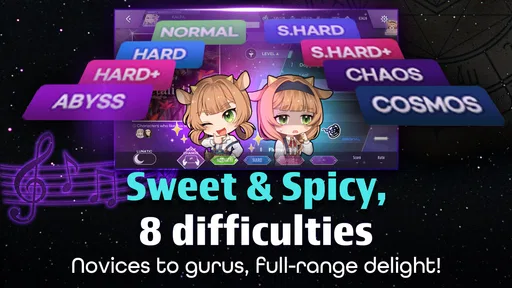
For those of you who love a good challenge, KALPA doesn’t disappoint. The difficulty levels range from easy to ‘how-do-my-fingers-even-move-that-fast’. It’s satisfying to master a particularly tough song and see your name climb up the leaderboard.
And let’s not forget the rewards. Completing songs and achieving high scores earns you in-game currency and other goodies, which you can use to unlock new content. It’s a nice little incentive to keep you coming back for more.
Final Thoughts
So, is KALPA - Original Rhythm Game worth your time? Absolutely! It’s a beautifully crafted game that offers an engaging mix of music and visuals. Whether you’re a rhythm game veteran or just looking for something new to try, KALPA is sure to keep you entertained for hours.
The game’s combination of stellar music, dazzling visuals, and challenging gameplay makes it a must-try for anyone who loves rhythm games. So grab your headphones, fire up KALPA, and get ready to tap your way through the cosmos. Trust me, you won’t be disappointed!
Verdict
Strengths of KALPA - Original Rhythm Game
- Engaging and dynamic rhythm gameplay.
- Visually stunning graphics and effects.
- Wide variety of music tracks available.
- Intuitive controls for seamless play.
- Regular updates with new content.
Limitations of KALPA - Original Rhythm Game
- Requires constant internet connection.
- Limited offline play options.
- Can be challenging for beginners.
- Some in-app purchases are pricey.
- Occasional lag on older devices.
Similar Picks in This Category
View All
Tiles Hop Music & Ball Game
AMANOTES PTE. LTD.4.3

Magic Tiles 3™ - Piano Game
AMANOTES PTE. LTD.4.6

Real Piano
Bilkon3.7

Piano Game: Classic Music Song
Dream Tiles Piano Game Studio4.0

Smash Colors: Music Ball Rush
BADSNOWBALL HONGKONG LIMITED4.2

Piano Music Go-EDM Piano Games
Joy Journey Music Games4.5
Frequently Asked Questions
What is the main objective of KALPA - Original Rhythm Game?
KALPA is a rhythm-based game where players tap to the beat of the music. The main objective is to achieve the highest score possible by precisely timing your taps to the rhythm. With a variety of songs and difficulty levels, players can challenge themselves and improve their skills.
Is KALPA suitable for beginners, or is it aimed at experienced players?
KALPA caters to both beginners and experienced players. It offers multiple difficulty levels, allowing newcomers to start with easier tracks and gradually progress to more challenging ones. The game’s tutorial also helps beginners understand the mechanics before diving into more complex songs.
Does KALPA require an internet connection to play?
KALPA can be played offline, allowing you to enjoy the game without an internet connection. However, certain features such as downloading new songs or accessing online leaderboards will require connectivity. This flexibility makes it convenient for users to play anytime, anywhere.
What kind of music genres can I expect in KALPA?
KALPA features a diverse range of music genres including electronic, pop, classical, and more. The game regularly updates its library, ensuring a fresh experience with new tracks that cater to various musical tastes. This diversity keeps the gameplay engaging for different audiences.
Are there in-app purchases in KALPA and are they necessary to progress?
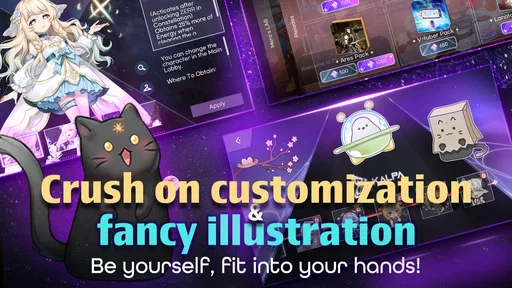
KALPA does offer in-app purchases, such as additional song packs and aesthetic customizations. However, these are not necessary to progress in the game. Players can enjoy a substantial amount of content for free, and purchases are optional for those looking to enhance their experience.
Play our best games!


